Technical Guides
2 min read
2/28/2026
Bridge Expansion Joint Movement Calculation: Thermal, Seismic, and Creep
By Engineering Team
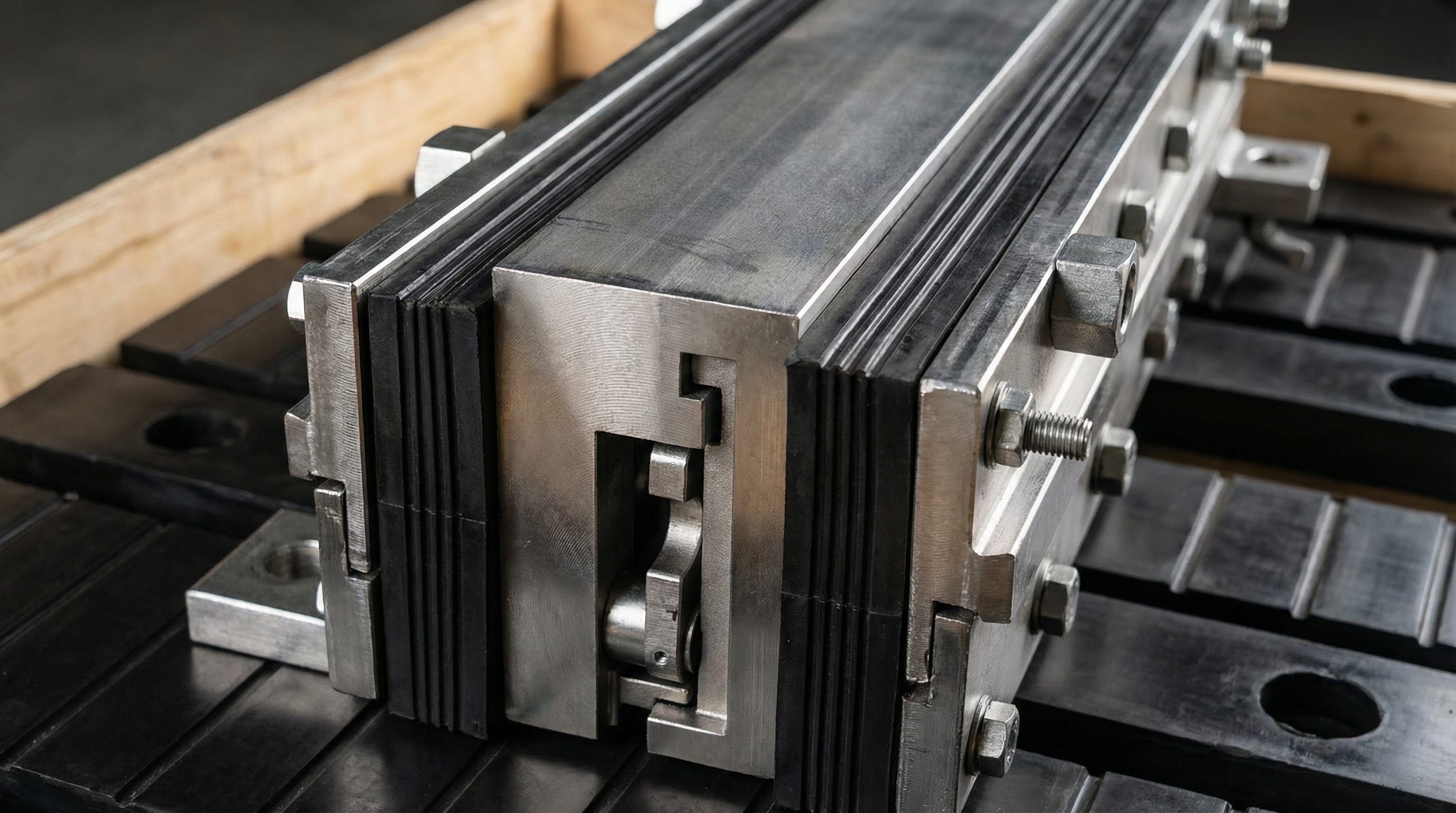
Accurate movement calculation is the foundation of expansion joint design. Undersized joints fail prematurely; oversized joints waste budget.
Thermal Movement: DeltaL = alpha x L x DeltaT. Steel bridges: alpha = 12x10^-6/C. Concrete bridges: alpha = 10x10^-6/C. Example: 200m steel bridge, DeltaT = 60C gives DeltaL = 144mm.
Creep and Shrinkage (Concrete Bridges): Long-term shortening due to creep and shrinkage can add 50-150mm to total movement for prestressed concrete bridges. EN 1992 provides detailed calculation methods.
Seismic Displacement: For bridges in seismic zones, displacement demand from response spectrum analysis often governs joint sizing. AASHTO Seismic Guide Specifications provide displacement demand calculation procedures.
Live Load Rotation: End rotation of bridge girder under live load creates additional vertical movement at the joint. Typically 10-30mm for highway bridges.
Design Movement: Total design movement = thermal + creep + shrinkage + seismic (SRSS combination) + rotation effect. Add 20% reserve for uncertainty.