Technical Guides
2 min read
2/28/2026
Bridge Expansion Joint Waterproofing: Preventing Structural Damage from Water Ingress
By Engineering Team
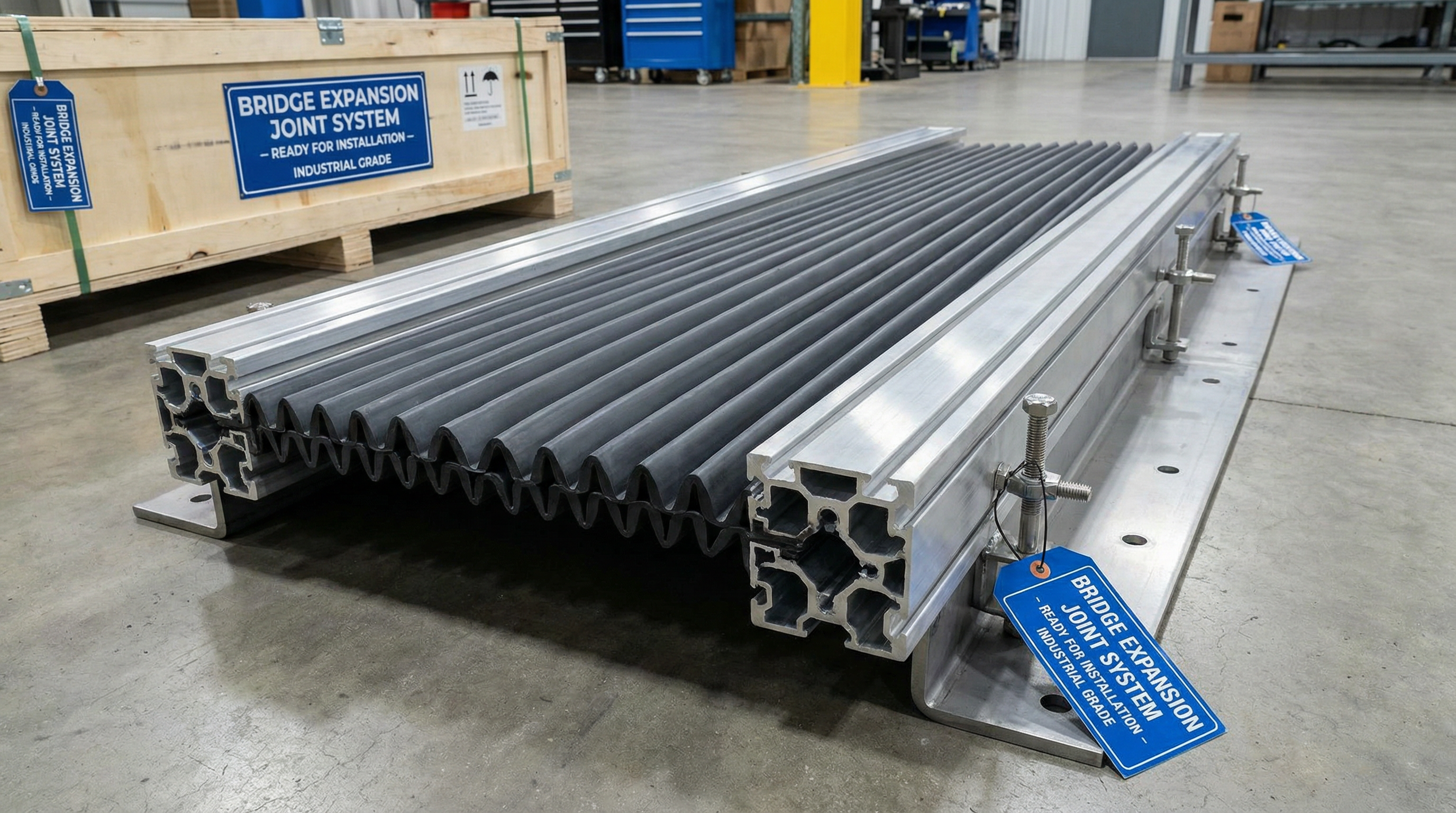
Water ingress through failed expansion joints is the leading cause of bridge structural deterioration.
Damage Mechanisms from Water Ingress: Corrosion of reinforcement steel. Freeze-thaw damage to concrete. Corrosion of bearing plates and anchor bolts. Contamination of bearing devices below joint.
Waterproofing Classes (EN 14187): Class 1: Splash water only. Class 2: Moderate water exposure. Class 3: Full waterproofing (required for most bridge joints).
Modern Waterproofing Solutions: Strip seal joints use EPDM seal providing continuous waterproof barrier with drainage trough below. Modular joints use multiple EPDM seals in series with drainage system collecting water from each seal level. Asphalt plug joints use seamless bituminous material providing inherent waterproofing.
Inspection and Maintenance: Waterproofing integrity should be tested annually by water ponding (minimum 30 minutes with 50mm water depth). Failed seals must be replaced within 3 months to prevent structural damage. All our joints meet EN 14187 Class 3 waterproofing requirements.