Technical Guides
2 min read
2/28/2026
Expansion Joint Design for Extreme Cold Climates: Arctic and Sub-Arctic Bridges
By Engineering Team
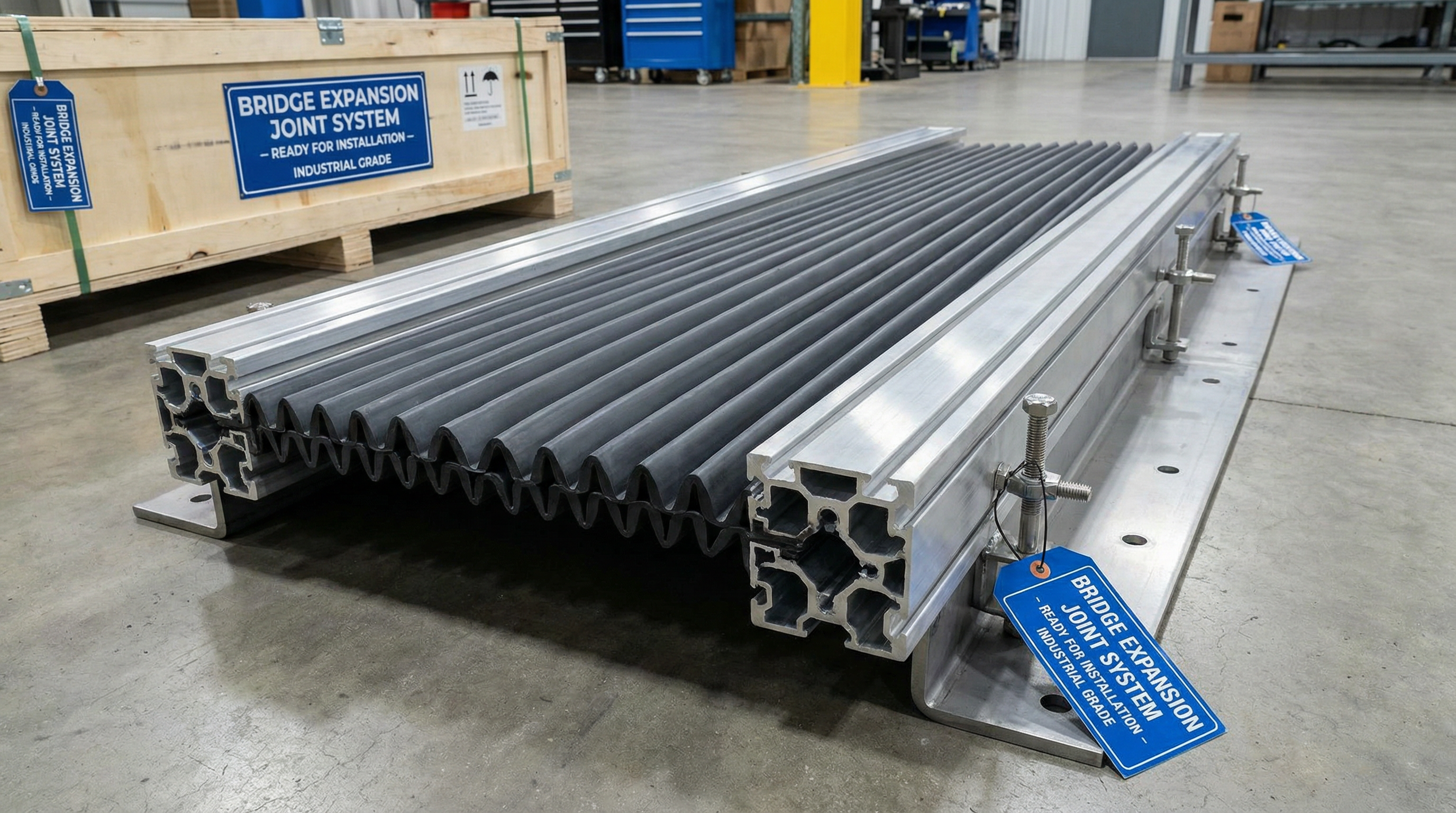
Bridges in Arctic and sub-Arctic regions face extreme challenges: temperatures to -60C, massive thermal movements, freeze-thaw cycling, and heavy deicing salt use.
Temperature Range for Cold Climate Design: Arctic (Alaska, Northern Canada, Siberia) ranges from -60C to +40C (DeltaT = 100C). Sub-Arctic (Northern Europe, Canada) ranges from -40C to +35C (DeltaT = 75C). Comparison: Temperate climate DeltaT = 50-60C.
Thermal Movement in Cold Climates: For a 200m steel bridge in Arctic climate: DeltaL = 12x10^-6 x 200,000 x 100 = 240mm. This requires modular expansion joints even for medium-span bridges.
Rubber Performance at Low Temperature: Standard EPDM seals become brittle below -30C. Specify low-temperature EPDM rated to -50C, or silicone rubber rated to -60C (higher cost). Test per ASTM D2137 (brittleness temperature test).
Steel Performance at Low Temperature: Structural steel can become brittle at low temperatures. Specify Charpy impact test at design minimum temperature. Use EN 10025 S355J2 or ASTM A709 Grade 50W for cold climate. Avoid stress concentrations in welded details.
Deicing Salt Resistance: Heavy deicing salt use in cold climates requires stainless steel (Grade 316L) for all fasteners, thermal spray zinc + epoxy coating for steel components, and EPDM seals with enhanced chemical resistance.