Standards & Compliance
2 min read
2/28/2026
Expansion Joint Performance Testing: Factory Acceptance Tests and Field Verification
By Engineering Team
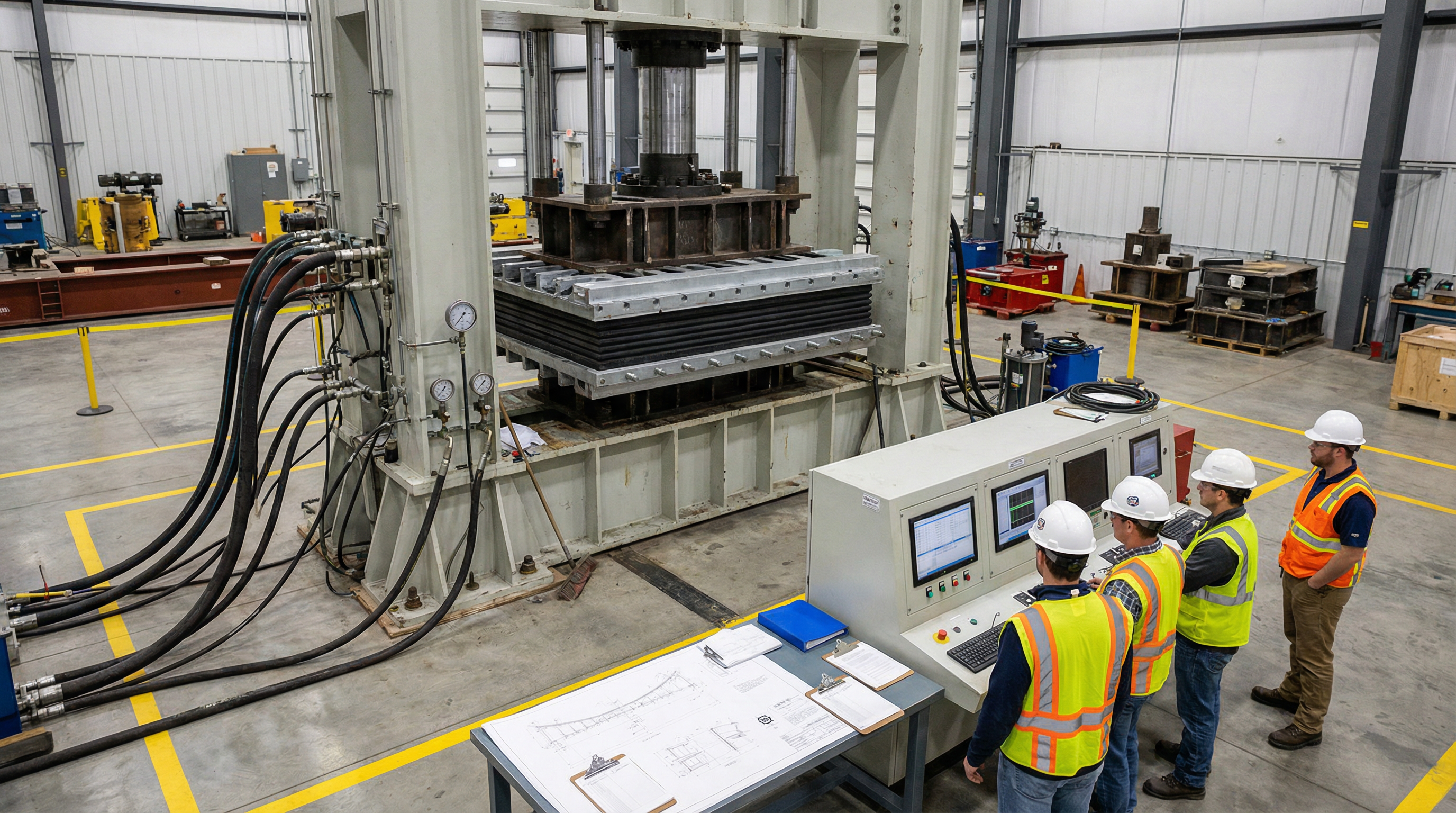
Performance testing verifies that expansion joints meet design requirements before installation and confirms performance after installation.
Factory Acceptance Testing (FAT) required per EN 1337-3 and AASHTO M 251:
1. Load Capacity Test: Apply design wheel load (typically 100-500 kN/m) and measure deflection. Maximum allowable deflection: 5mm under design load.
2. Movement Cycling Test: Cycle joint through full movement range for minimum 1,000,000 cycles. Inspect for fatigue cracks, seal damage, or bolt loosening after test.
3. Waterproofing Test: Pond water on joint surface for 30 minutes at 50mm depth. No leakage permitted through joint.
4. Noise Test: Measure noise level under simulated traffic loading. Maximum 65 dB(A) at 7.5m for urban bridges.
5. Dimensional Inspection: Verify all dimensions against design drawings. Tolerance: +/-2mm for gap setting, +/-3mm for overall dimensions.
Field Verification Tests: Gap setting verification at installation temperature. Level check across joint (tolerance +/-3mm). Anchor bolt torque check. Waterproofing test (water ponding).
Documentation: All test results must be documented in a test certificate. Factory test certificates should be submitted to the engineer before installation.