Technical Guides
2 min read
2/28/2026
Expansion Joint Rehabilitation vs Replacement: Decision Framework for Bridge Owners
By Engineering Team
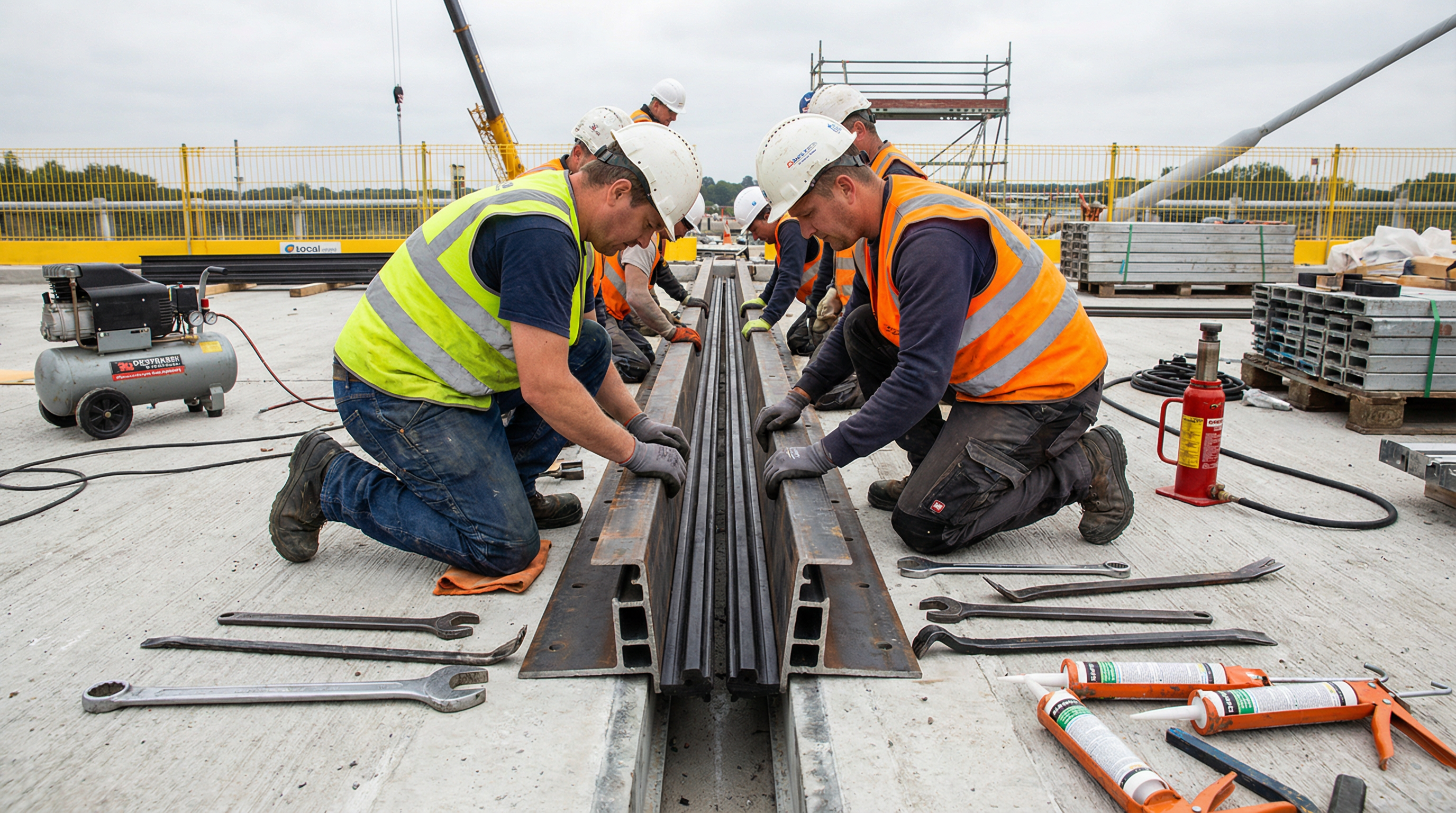
When expansion joints show deterioration, bridge owners face the decision: rehabilitate or replace? This framework provides a systematic approach.
Condition Assessment First: Before deciding, conduct a thorough condition assessment including visual inspection (all components), gap measurement (compare with design), waterproofing test (water ponding), load test (if structural concerns), and estimate remaining service life.
Rehabilitation Options:
Seal Replacement (Minor Rehabilitation): Applicable when steel components are in good condition, concrete edge beams are intact, and only seals are damaged. Cost: 20-30% of full replacement. Expected additional life: 10-15 years.
Partial Replacement (Moderate Rehabilitation): Applicable when some steel components are corroded, edge beams need repair, and seals have failed. Cost: 40-60% of full replacement. Expected additional life: 15-20 years.
Full Replacement: Applicable when multiple components have failed, waterproofing is compromised causing structural damage, or joint type is no longer adequate for current traffic. Cost: 100% (baseline). Expected life: 25-50 years (new joint).
Decision Matrix: Grade 7-9 means continue monitoring. Grade 5-6 means plan rehabilitation within 2 years. Grade 3-4 means rehabilitate within 6 months. Grade 1-2 means emergency replacement.