Technical Guides
2 min read
2/28/2026
Noise Reduction in Bridge Expansion Joints: Design Strategies for Urban Bridges
By Engineering Team
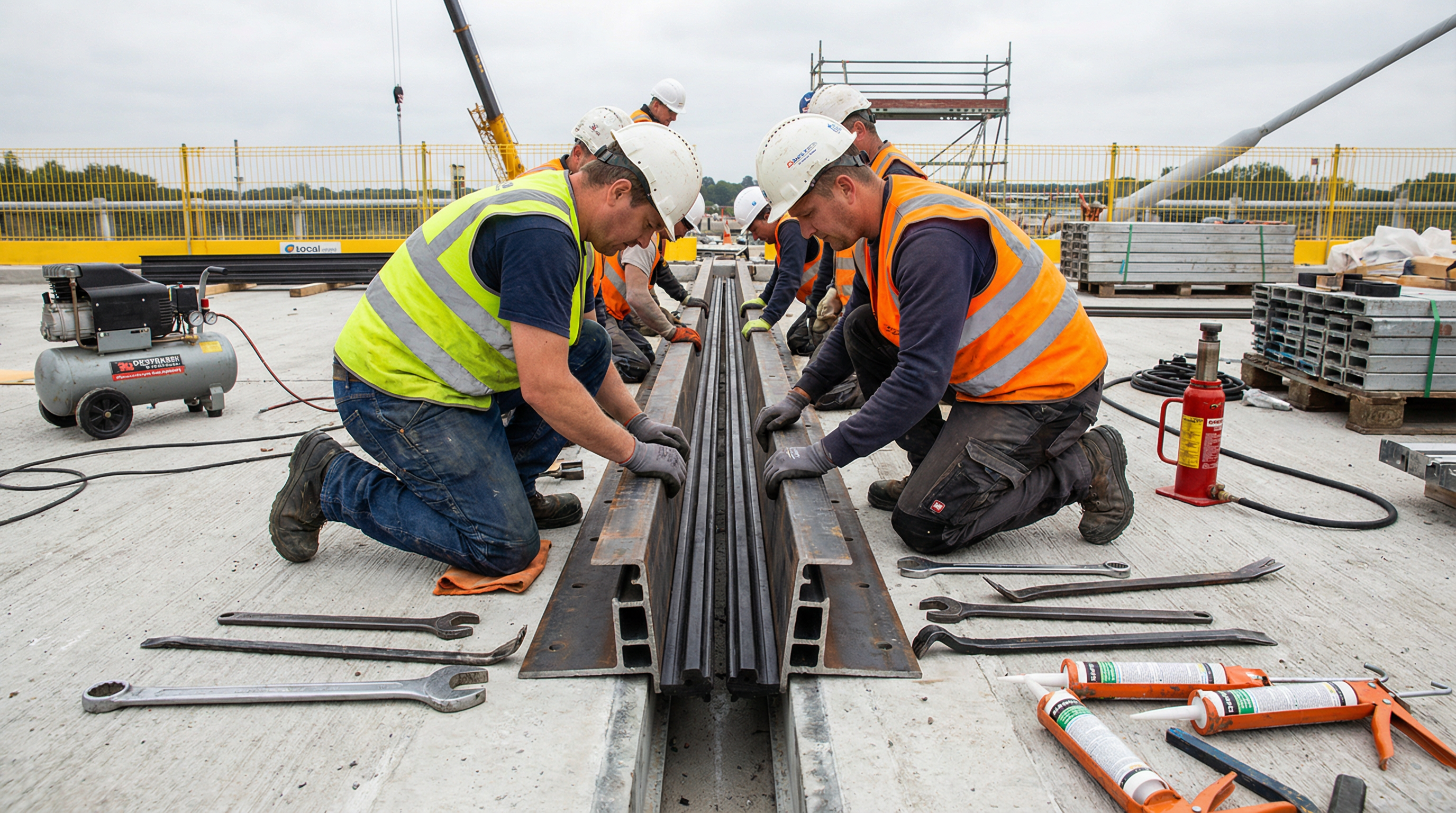
Expansion joint noise is a significant concern for urban bridges near residential areas. Modern joint design can reduce noise levels by 10-15 dB compared to older designs.
Sources of Joint Noise: Impact noise from vehicle wheels crossing the joint gap (dominant source). Resonance of steel components under dynamic loading. Vibration transmission to bridge structure.
Noise Reduction Strategies:
1. Joint Type Selection: Asphalt plug joints produce lowest noise (seamless surface). Elastomeric pad joints produce low noise (rubber dampening). Modular joints produce higher noise (requires mitigation measures).
2. Gap Width Minimization: Smaller gaps generate less impact noise. Use temperature-compensating gap settings to minimize gap at peak traffic hours.
3. Surface Treatment: Rubber nosing strips on finger plate edges reduce impact noise by 5-8 dB. Anti-vibration pads under center beams reduce structure-borne noise.
Noise Standards: Urban bridge joints should achieve <65 dB(A) at 7.5m from joint centerline per WHO urban noise guidelines. Our elastomeric and asphalt plug joints typically achieve 55-60 dB(A).