Railway Bridge Expansion Joint Solutions: Ballasted and Non-Ballasted Track
Specialized expansion joint solutions for railway bridges including ballasted track, non-ballasted (slab track), and high-speed rail applications compliant with EN 13232 and AREMA standards.
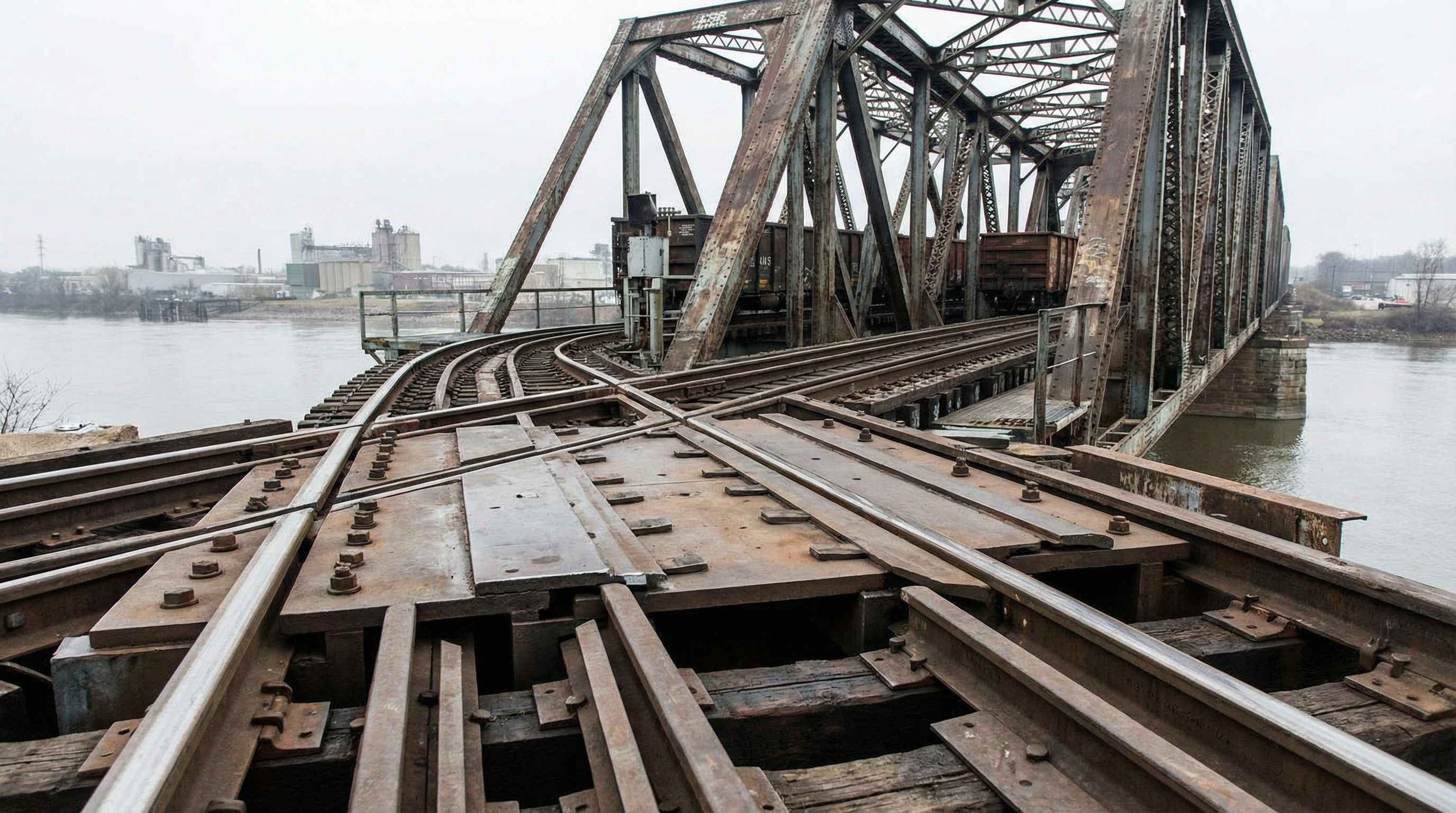
Challenges Addressed
- •Continuous rail geometry maintenance
- •Ballast retention at joint location
- •High dynamic loads from rail traffic
- •Strict track geometry tolerances
- •Limited maintenance window availability
Benefits
- •EN 13232 and AREMA compliant
- •Compatible with standard and broad gauge
- •High-speed rail rated up to 350 km/h
- •Ballast retention prevents track geometry degradation
- •In-service adjustability for seasonal variation
Solution Details
## Railway Bridge Expansion Joint Solutions Railway expansion joints face unique challenges compared to highway joints: continuous rail geometry, ballast retention, high dynamic loads, and strict maintenance requirements. ### Railway Joint Types **T-Type (<=40mm):** Economic solution for short-span railway bridges. Welded or bolted installation. Suitable for freight and commuter rail. **Ballasted Track Under-Joint (<=150mm):** Concealed joint beneath ballast layer. Maintains continuous ballast surface for passenger comfort. Requires specialized installation. **TW Adjustable (40-150mm):** Adjustable gap setting for seasonal variation. Ideal for bridges in regions with large temperature swings. **Ballast Retention Type (>150mm):** For large-movement railway bridges. Integrated ballast retention walls prevent migration. Used on major river crossings and long viaducts. ### Standards Compliance All railway joints comply with EN 13232 (European) and AREMA Chapter 8 (American) requirements for track geometry, load capacity, and maintenance access. ### High-Speed Rail Considerations For speeds >200 km/h, special attention to: rail continuity (welded rail preferred), noise and vibration, dynamic load amplification factors, and reduced maintenance intervals.